Alice Potts turns sweat into fashion
Alice Potts talks us through her fashion pieces made of sweat crystals and explains how multi-disciplinarity is the key.
Subscribe with Opencell to stay up to date or follow their social channels @opencelllondon

Alice Potts talks us through her fashion pieces made of sweat crystals and explains how multi-disciplinarity is the key.
Subscribe with Opencell to stay up to date or follow their social channels @opencelllondon
This feature is taken from our CHANGE (printed edition) and will be one of the ongoing features DE will be revisiting and updating over the following months after hearing the news last month, ‘Eyal Weizman barred from U.S. ahead of Forensic Architecture retrospective’
Words: Constance Desenfant
Forensic Architecture questions the role and responsibility of architects in light of ongoing and increasing urban conflicts.
While terror attacks are nothing new in the UK, the perceived level of threat has never been higher. Planned, foiled and actioned atrocities have left more than emotional scars on the country, with sturdy barriers and concrete blocks long-since installed between driving lanes and pavements on London’s major bridges and other potential targets in the capital and beyond. The idea being to mitigate damage should history hit repeat.
It’s one of many signs that, surely and perhaps not that slowly, cities are changing in a way we could not have predicted just a few decades ago. More and more space is being lost to violence, even in locations we would not necessarily consider to be caught up in direct conflict.
Eyal Weizman, founder of Forensic Architecture (FA), is an expert on the subject. Israeli intellectual, writer, activist, architect and professor teaching Spatial and Visual Cultures at Goldsmiths University, London, he has developed an impressive understanding of the architecture of violence and occupation.

It might be difficult for some people to believe, but architecture can be used as a weapon, with its elements ammunition; tactical tools to implement pressure, domination, self-protection, or control over a population. As such, cities can be seen as live theatres for a new type of urban warfare, both in the literal understanding of that phrase and more subtle ways.
“The majority of civilian casualties occur in buildings so architects are the best-placed to offer their expertise in tracing how these events happened,” says Weizman. This is part of the reason why he created FA in 2011— to use his skills as an architect to compile evidence and defend human rights when they are violated.
Today, there are some 30 people in the FA team worldwide with around half based in London. Their job is to produce evidence files in the shape of models, drawings, maps, web-based interactive cartographies, films or animations, allowing them to present information in a convincing, precise, and accessible manner in pursuit of accountability.

The team of passionate architects focus on cities struggling with war and unrest, but do not contribute to the construction of battlefields for new conflicts. Instead, they use their skills to re-question the purpose of their profession.
Talking about Israel and Palestine— arguably the world’s foremost frontline of architectural warfare— in the closing segment of Al Jazeerah-produced documentary ‘Rebel Architecture: The Architecture of Violence’, Weizman defends the approach and is clear on the position architects should adopt in certain situations:
“I love this land and I care deeply about both peoples that live here. And I think looking at the landscape I see this kind of slow process of killing. I would have loved to practice my architecture free of the constraints and violence of this conflict, but I think that to be an architect is not only to build and to contribute to the destruction of the place I love most, but to use architecture as a way to both interpret, protest and resist.”
Design Exchange met with two professionals that have and continue to be directly involved in the FA team. Sarah Nankivell is the research agency’s current programme manager, and Omar Ferwati was project coordinator for work on the Al-Jinah Mosque in Syria— one of the most compelling cases in support of the use of this process. Like other members, past and present, they each have different backgrounds and interests, which contribute to expansion of the studio’s already-rich tapestry.
Both are Canadian, Ferwati originally hailing from Syria and trained as an architect, Nankivell schooled in Egyptology and concerned with how the past, architecture and archaeology can be used to inform present solutions through new technologies and an understanding of heritage as a key proponent during conflict.
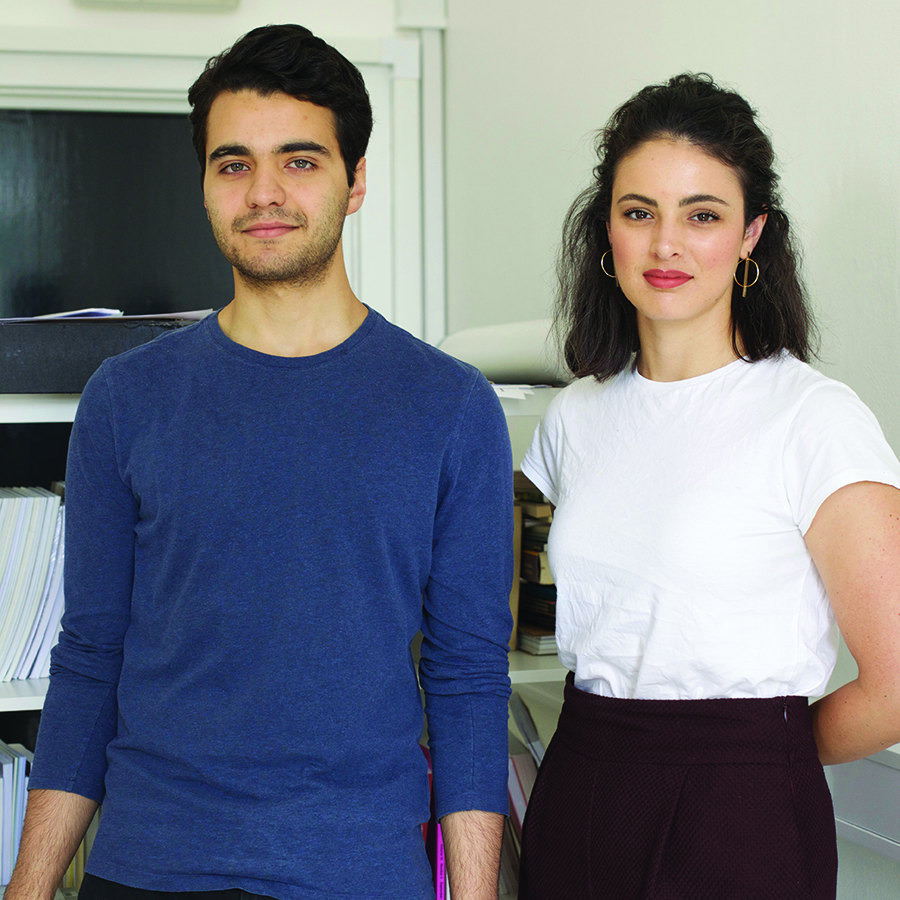
Beside them, FA also includes an extended team of collaborators and PHD students scattered around the world, from film editors to programmers and journalists. Most speak two or three languages, if not more, which, coupled with their varied skill set, means they can react efficiently in a broad range of situations.
“Most of us are architects so we have a certain spatial awareness and expertise of understanding spatial conditions and characteristics”, explains Ferwati.
Nankivell clarifies the origins of their projects: “[They] operate on two levels: some come from our own funders, the European Research Council or independent funding; for others, we are hired on a project basis by different NGOs such as Amnesty International and Human Rights Watch.”
This was the case for the Al-Jinah Mosque, on which Ferwati worked for Human Rights Watch, in partnership with Bellingcat, another investigative team. Their role was to prove the US deliberately targeted a functioning mosque, killing more than 50 civilians, despite official claims the location of the strike was regularly used for Al-Qaida meetings.
FA undertook an architectural assessment of the scenario. Statements were taken from witnesses on the ground, reporters, journalists, and hospitals where the victims were taken in the rescue operation. A local photographer was hired to document the ruins of the building and one of the contractors originally involved in construction was contacted, using social media platforms like WhatsApp, Skype and Facebook to talk through the architectural plans, drawings and sketches.
From this they compiled overwhelming evidence demonstrating that the target was a functioning mosque, reconstructing a 3D model from the imagery, allowing them to locate each room and each victim found in the rubble.
“Through this process and methodology the architecture becomes a lens through which we can look at the scene where the event occurred and do a sort of reconstitution,” says Ferwati.


The three organisations and research agencies involved published their report in a bid to unveil the truth. The US responded to Human Rights Watch by revising the findings of the official investigation. Through the process of projects like this, FA’s team members become archaeologists of recent atrocities and upholders of the law in the present, furnishing prosecutors with evidence to be used in court cases and international tribunals. The ultimate goal being to bring human rights violators to justice.
FA does not only focus on conflict zones and wars. The team also acts in many different realms where violence challenges basic human rights. Environmental battles represent another aspect of the work conducted by the research agency. The team tries to demonstrate how extraction of natural resources, and the resulting global warming, has led to the destruction of both ecosystem and people.

Kivalina is an Alaskan Inupiaq village of around 400 residents, situated on a barrier island in the Arctic, which had to seek relocation due to climate change— in this instance erosion and flooding of basic infrastructure. In collaboration with ReLocate, FA fought alongside the village. The final report stated that 24 of the largest oil and gas corporations should be held responsible for the consequences of greenhouse gas emissions, and therefore had a duty to contribute to any relocation costs.
The tools and skills FA gathered over the years allow the team to register past and present forms of violence in different realms or ecosystems and to extract evidences. A new form of public truth, technologically, architecturally, and aesthetically produced, which can help make calls for transformative politics more audible.
Another team of the research agency uses FA’s mapping skills and surveillance technologies to support a coalition of NGO’s demanding accountability for the deaths of migrants in the Central Mediterranean Sea— a tightly monitored NATO maritime area. Their aim is to show how Western powers often use the complex and overlapping jurisdictions at sea to ignore the pleas of stricken boats, avoiding their responsibility to rescue people in distress.
In one example, FA’s team was able to precisely reconstruct how events unfolded when a vessel was left adrift for two weeks in March 2011, leading to the death of 72 migrants. The resulting report formed the basis for a number of legal petitions filed against NATO member states.
This particular instance is now more relevant than ever given hysteria surrounding the European refugee crisis has reached deafening volume, with the UK yet to clarify what role it will play in tackling this post-Brexit. Meanwhile, countries across the Mediterranean Sea continue to sidestep humanitarian duties of this kind.
The Aquarius rescue boat— chartered by SOS Mediterranee and Médecins Sans Frontières— is another case in point. Carrying over 600 asylum seekers including 123 unaccompanied children, in June 2018 the vessel was refused permission to dock in both Italy and Malta, before finally being offered a safe port in Spain. FA acts in such situations to confront institutions or governments with their legal obligations, attempting to ensure they meet these or face the consequences.
There appears to be no limit to the range of scenarios where FA intervention could, and should, be used. Similarly, the roles that can contribute to these cases and help defend human rights abuses are wildly varied.
“No matter what your skills are and what your profession is, there may be opportunities in which you can apply them to defend human rights or seek truth. It’s just a matter of repurposing your skills to tackle different issues,” declares Ferwati, who is keen to promote the practice of architecture in different contexts, as well as encourage universities to prepare future architects for input in a wider range of situations.
On the question of academia, Nankivell also has her view.
“I think what is really important about what we are doing is how academia and conceptual work can be really relevant in some situations, because so often things taught at university are disconnected from the real world. That’s what is so powerful about what we are doing with FA; we are taking academic knowledge and perspective, as well as our practical skills, and combining them in this whole new way that is very relevant and inspiring. It can have a real impact.”
The Romantic view of an architect leaving a mark or legacy for the future has much relevance here. After all, this is a place where job satisfaction stems from attempts to defend human rights, which in turn can lead to lasting changes to policy, regulations and laws. But questions remain about the role and responsibility of architects within this.
Their expertise and knowledge of the built environment, the powerful analytical tools and efficient visualisation techniques allow architects to react quickly, whether explaining how a tragedy happened or— when possible— inventing solutions to prevent events occurring again. It’s about proactive architecture and practitioners using the tools at their disposal to restructure their surroundings, in turn redefining their profession.
But what will the cities of tomorrow look like considering the clear increase in urban violence? Could security infrastructure ever completely remove the risk of terror attacks?
The US, Israel, and the UK are among the nations that have led the thinking on protecting public spaces with the development of measures ranging from large robust barriers to incredibly subtle, barely noticeable changes to the street scene. But is this the right way forward? For architects and city planners, what is the correct attitude to adopt? Within the design, should they prioritise safety and security over prime urban qualities like accessibility, inclusiveness and openness?

Another question that arises from this investigative practice of architecture focussing on human rights violations relates to mediatisation. The FA team worked on a 3D video of London’s Grenfell fire, in which 72 residents of a tower block perished amid an uncontrollable blaze. The goal was to better understand how the flames spread through the building, and began shortly before the practice was shortlisted for the 2018 Turner Prize, the UK’s most prestigious art award.
While praised for “developing highly innovative methods for sourcing and visualising evidence relating to human rights abuses around the world”, the FA team and the art and architecture worlds seem sceptical about the nomination.
Phineas Harper is a critic, designer and Deputy Director of the Architecture Foundation think tank, and raised his concerns by declaring: “FA winning the Turner Prize would risk turning sensitive investigative work into insensitive entertainment”. Weizman himself said the nomination was “bittersweet… ….more bitter than sweet”.
The collective’s most recent undertakings can be questioned with regard to potential exhibitions in galleries and at special events. Grenfell Tower, for example, has not contributed to any conclusions within the official investigation at the time of writing, while the work could easily awaken traumatic memories for those directly or indirectly affected.
FA is very conscious of this, though, and appears to understand when discretion is more important than mediatisation. Their work remains primarily meaningful and relevant, rather than being reduced to eye-catching commercial art. Looking ahead, the organisation foresees new opportunities in the way technologies evolve, making new tools and techniques available.
“A lot of what we do has benefited from the availability of technology, it facilitates communication with potential witnesses thanks to social media,” Nankivell explains. “Technologies like cameras, digital recording equipment, satellite communication and drones can really make a big difference on the research and practical side of a project.
“We can also benefit from a massive portal of images flooding in from conflicts. Assembled piece-by-piece, they create a bigger picture and a better image of what is actually going on there,” she continues. “The software or communication platforms we use drive us towards more accurate results but it can also bring new issues, like the saturation of images that need to be filtered out.”
The conflicts also become more complex with technology— new networks are created and webs of information become widely available which can be interpreted or transformed quickly. A sort of secondary conflict seems to occur in the background of these battles, as we try to assess the authenticity of interpretations that take place in the news and on social media.
This combined process of urbanisation and ‘mediatisation’ of war makes forensic architecture an urgent and indispensable practice for human rights investigations. Put simply, it is something we must discuss as an alternative approach to architecture if we are to work in a more responsible and human manner.
This feature is taken from our CHANGE (printed edition) and will be one of the ongoing features DE will be revisiting and updating over the following months after hearing the news last month, ‘Eyal Weizman barred from U.S. ahead of Forensic Architecture retrospective’
Congratulations to Bait Film, BAFTA winner of the Outstanding Debut by a British Writer, Director or Producer Award.
Design Exchange featured this incredible Independent Film in our CHANGE edition, which printed just a few months prior to Bait film’s first UK screening. We were lucky enough to attend to BFI film premiere. We are so pleased for Mark Jenkin and our friends Linn Waite and Kate Byers from Early Day film (who we met during Design Exchange’s short stay in Bristol a few years back) and the rest of the hugely talented team.
Mark Jenkin’s latest film presents economic conflict in one of Britain’s most remote corners through narrative, aesthetics and the production process itself.
Cornwall seems trapped at a kind of perpetual crossroads. Much of its identity is understood through industrial history, with mining existing in the county for almost as long as memory itself. The same goes for fishing, but for some time now both have been competing with another business; namely tourism.
Mark Jenkin is a Cornish filmmaker, based just outside Penzance, who is eager to show this economic conflict’s muddy complexity. Through the microcosm of a coastal village and two brothers’ fishing business, Jenkin’s new feature, ‘Bait’, considers how these sectors struggle to coexist.
Jenkin is keen not to favour one side of the debate, and stresses that although the characters in the film “argue until they’re blue in the face with one another… …nobody’s got a bad intention”.
Comparing ‘Bait’ to a Western, that position becomes clearer:
“It is a frontier story, it’s about the settlers arriving, and imposing order and civilisation on a bunch of natives who are living off the resources that are there.”

This mistrust of new, invasive culture is reiterated through Jenkin’s cinematography. Like his previous film, Bronco’s House – which similarly looked at the gritty life of a Cornish coastal village – Bait is shot in black and white on an old Bolex16mm film camera that Jenkin tells me is older than he is.
Although he takes a strong stance against modern filmmaking, it would be wrong to call Jenkin nostalgic. He is not sentimental about the past, rather he is aware of the weight the past pushes on the present. Cinema, for him, is really a young art, and film has not been outmoded by digital. Instead, it has just suffered from a certain form of neophilia.
Jenkin hand processed the film shot for ‘Bait’, methodically treating it with a variety of chemical solutions. The result can forever tie practitioner to medium.
“[I]f you put your finger on the actual frame of the image, your fingerprint will be there forever,” he explains, calling to mind the joy a craftsperson takes from their work, rather than a slick director. The imperfections created in this developing stage are very much part of the final piece.
He offers two more frames which contain another blemish. Taken from a scene in which a woman is shown walking in the rain, lit by a single lamp, one of the frames is solarised, a direct effect of Jenkin exposing it to light to check if the roll of film was developed correctly. The section was permanently altered.

Due to how little film Jenkin usually shoots for each title (‘Bait’ is made from just five hours of footage, give or take), and the fact each roll of film in the Bolex camera runs to a mere two-and-a-half minutes, solarised sections of film may be the only images he has for a certain line of dialogue, and therefore could make the final cut. But this doesn’t concern him.
“I love that,” he says. “They’re the mistakes that create amazing randomisation and individualism in the image.”
As much as there is a fight to get the material to do what he wants, there is an acceptance of what the material determines too. This imbues Jenkin’s films with a magical, raw life of their own. Fitting, for the subject at hand
Words: Stan Portus
We still have limited stock of our CHANGE edition – Buy here

Born into a family of hugely-respected journalists, it’s no wonder Yousra Elbagir’s own portfolio name-checks some of the most influential media organisations on the planet. Her work has been commissioned by the likes of Financial Times, Vice and Channel 4’s ‘Unreported World’, and she is currently a reporter for Channel 4. An expert on Africa, and specifically Sudan, her passion for telling stories that may otherwise have been overlooked or, worse still, completely ignored guides many of her undertakings.
DE: What motivates you?
My parents are journalists and I grew up watching their newspaper sort of get ripped apart, and we also moved around the world based on my father’s newspaper getting banned and his political affiliations. So I think from a very young age I saw the importance of journalism and the importance of information, in terms of dismantling the systems and allowing people to be aware of the world they are in.
So that was the initial intrigue for me, but now what I think motivates me, coming from a country that has a pariah status, I understand the role of the media in building these narratives and giving gravity to certain situations and stories.
I think it’s crucial there are people from a variety of backgrounds involved so a variety of stories can be told. And it’s not just a diversity thing, it’s about a variety of perspectives in every newsroom and at every publication to allow for nuances to come through, for stories to be told that wouldn’t even be on the radar of mainstream media outlets.
Was there a landmark moment in your career that shifted your perspective?
I think each period ends and I have to recalibrate and consider why I’m doing this. Most recently that recalibration moment came in Sudan when I was covering the uprising. That feels like a moment that I will carry with me for the rest of my career.
I have reported in Sudan for a long time, I left university in 2015 and went back to Sudan to train in the field and was working there for a year and a half, but this time felt different because it felt like impact journalism, you know? I knew that if I reported on a hospital emergency room being attacked by government forces that could impact on whether or not it happened again.
And that was the first time that I really saw coverage that I contributed to having an impact on the ground, and I think that’s when I sort of realised that you can actually make a difference with what we do, it’s not just a dream.
If you do a story, and do it well and you report on something that would otherwise not have got any media coverage then you can change things on the ground. But obviously it’s a huge team effort, it wasn’t just me, there was an amazing producer called Darius Bazargan and obviously the Channel 4 News team who were consistently supportive in giving space to the story in Sudan.”

DE: Who inspires you?
Quite a few people. It shifts. My ultimate role model was my sister, Nima, she’s a senior correspondent for CNN and I grew up watching her build her career as a journalist in international media, but after spending time in Sudan with my parents as journalists I’m now adopting them as the ultimate role models for how to cover news and how to cover stories in the most ethical and effective ways possible.
Nima looked up to them when she was training and building her career, and I looked up to her. Now I look up to all three of them. And also my brother is a media manager. So honestly, just to summarise then, my family are my role models in the way they have supported my coverage and my sister’s coverage and created a foundation of love and unending support.
Continued…..
See the full feature in our current Change edition

Deeyah Khan is an award-winning documentary filmmaker of South Asian origin who was raised in Norway. Her work addresses issues surrounding religion, extremism, cultural and societal expectations, questioning stereotypes, with the intention to educate, empower and inspire change. In addition to her efforts behind the camera, she is the founder of the two-time Emmy-winning and the twice BAFTA-nominated media production company Fuuse, which focuses on giving a voice to minorities, and established the magazine ‘sister-hood’, publishing writings from women of Muslim heritage, whether they actively practice the religion or not.
DE: What motivates you to do what you do?
I’m passionate about human rights, women’s liberation, inclusion, free expression, and I’m passionate about telling stories, especially stories that wouldn’t get told otherwise. I always want to better understand big problems in our societies and my filmmaking is my personal way of getting to the heart of the matter. I want to find out what people feel, not just what they say.
Going under the surface was how I created ‘Jihad’ and ‘White Right’. In both cases I have been talking to men involved in violence, which they justified with reference to these exclusionary ideologies. Some of these men were really scary, but it wasn’t necessarily the ideology that was driving them. They all had holes in their lives that they were filling up with this ideology, social problems that they were compensating for through being involved in these groups.
I feel that we can’t necessarily change people by challenging their opinions directly, because there are often reasons why they hold those opinions that are often based in emotion, not fact. We have to think about what made those opinions important to them in the first place. Why would these men, whether white supremacists or jihadis, choose to identify themselves as part of what they perceive to be a superior group, and as the victims of another, ‘inferior’ group? What emotional need does this fulfil? I think these are far more important questions than asking them to explain why they think Islam means striving to live under a caliphate or why they think white people are superior to others.
I get them to put those arguments and their talking points to one side, because I find those arguments to be predictable and boring— I already know what they believe. What I want to understand is why they believe and do the things that they do. I am far more interested in getting them in touch with their emotions rather than having a superficial conversation. It’s always surprising how revealing that can be.
The other big theme in my work is around women and people who exist between cultures. Growing up myself as a South Asian woman in Norway, I’m aware of the different pulls of family and community and how it can clash with the mainstream culture of the societies that we grow up in. I’m very aware of how this impacts upon women, due to cultural taboos around sex, sexuality, self-determination, honour, shame culture and religion. The subject of my first film, ‘Banaz: A Love Story’ was about the strain put upon young people to live up to standards of ‘honour’— the values of their parents and their parents’ community.
These values are in tension with any young person’s desire for freedom and self-expression, particularly when it comes to relationships. Disagreements on the subject of religion can be just as contentious. This is especially true in an environment where extremely reductive and restrictive interpretations of Islam are being violently enforced by some in the community. I explored this in ‘Islam’s Non-Believers’.
With each project, I’m motivated to explore a social problem that I think we need to understand more deeply and to talk about more openly, or that we need to think about differently. And I’m always hoping that I can make a positive impact on how we, as a society, deal with the issue.
DE: Is there a landmark moment in your career that really shifted the way you see the world?
I was abruptly forced out of one lane and had to find another. From a very young age, I followed my father’s career plan. I was brought up in Norway in what was, and still is, a very white-dominated society as a half-Pakistani, half-Afghan daughter of immigrants. It was my father’s perception that my natural talent for singing was the only way that I could make a career for myself in what he perceived to be a racist society with limited opportunities for people of colour. I loved music, but I never really enjoyed performing even though I was proud to share aspects of my South Asian culture.
As I became more successful, I became a target for some of the conservative elements within the local Muslim community, which was beginning to become influenced by extremist expressions of Islam. From being a celebrated symbol of multicultural Norway, I was suddenly in risk of my life, threatened by extremists in my parent’s community. My whole career was over. It was devastating and honestly, I felt lost and broken. But at the same time, I realised that it had finally freed me of being committed to music as an outlet for my creativity. Instead of following my father’s dreams for me I was finally able to focus on the issues that I personally cared about: around feminism, around multiculturalism, around problems arising in families that were caught between cultures.
These solidified in my first movie, ‘Banaz: A Love Story’. I’d really only intended this as a small-scale personal project. It became more popular and successful than I’d ever dreamed. I had found my lane. I finally found my own heart and my own passion, which is to tell stories through my documentary filmmaking.
DE: Who inspires you?
I’m primarily inspired by women. My mother is my greatest inspiration. Also there are so many women that I have had the honour to work with that it would be hard to name them all. Each and every one of them has inspired me and challenged me and supported me. I could not have achieved much without their support.
See the full feature in our current Change edition

Congratulations Dirk Koy, his work «ground» won the Basler Medienkunstpreis this week. The work is currently exhibited at HeK Basel during the Regionale 20 until 29th December 2019
Speaking with Design Exchange’s cover animator, Dirk Koy
Design Exchange’s issue animator understands that digital and analogue can co-exist, with phenomenal results. Better yet, as the first pages of our Change edition prove, he knows exactly where the two should meet to create something functional yet innovative, creative but logical.
When was the last time you felt completely in sync with someone after mere moments in conversation? A meeting of minds in some shared theoretical or ethical hinterland; two worlds colliding over a shared love of pushing things forward. Whatever those things may be.
Design Exchange’s Change issue is not the first to implement Augmented Reality (AR). We were toying with this technology three years ago, with other magazines jumping on its potential between then and now. Nevertheless, this is our deepest dive into its possibilities, and to produce something different, we needed to partner with a practitioner who not only grasped what could be done but also understood why it should be done.

Introducing Dirk Koy, the man behind the moving text and images filling the pages, not to mention our multi-faceted cover. For him the greatest design marvel of the modern age isn’t the advancement of technology, but what happens when that advancing technology collaborates with analogue counterparts.

“I really like to draw, and that’s just one basic element in design. It’s very important to make the first sketches,” says Koy. “Even if your product or the piece is digital you start with a pencil. This is a little bit cliched but it is like that, and it gives us a really nice open world of possibilities.”
A teacher at the Academy of Art and Design in Basel, Switzerland, we can’t help but feel slightly jealous of his students. After all, their tutor fully embraces and manipulates the opportunities and jaw-dropping capabilities of 21st Century multimedia, often presenting those in a manner invoking post-modernity. His moving posters, for instance, inadvertently invoke the advertising hoardings of Philip K. Dick’s dystopias. Yet the platforms those looped images and text occupy, which we can literally reach out and touch, betray the equal value he places on physical media.
“To experiment so much within things that you reach a moment when you surprise yourself,” Koy says of his overall professional goals.
“I like to combine analogue design with digital, so for me this drawing process at the beginning of a project is important but also it often comes into the end of the product. Not always but often. So for me the analogue thing, the drawing and photographs, is kind of the soul of a work and the digital thing is often to transport the work or bring it further into something new. If you combine digital and analogue work there is huge potential with what you can do.”
Not quite preaching to the converted, even so there’s a reason why Design Exchange approached him for our latest undertaking.
……Read the full feature in our printed CHANGE edition and see much more of Dirk’s work using our augmented reality app, See our stockist or buy online
Documentary filmmaker Deeyah Khan is featured as one of our Change Makers in the current Design Exchange #Change edition
Documentary filmmaker Deeyah Khan is determined to confront hate and prejudice by meeting some of the most extremist groups in the world. She has sat down with White Supremicists in the US and interviewed former Jihadists to further understand what drives people to join these groups. Her film “White Right: Meeting The Enemy” won an Emmy and is available on Netflix. We discuss the role politics, class, feminism and everything in between plays in relation to this issue. Listen to all the latest episodes of my Under The Skin podcast only on Luminary – sign up for free here
We designed a camera system for photographers whose passion take them far and wide, to distant and spectacular places. The Phase One XT was created to be brought along on long trails and off-road scouting expeditions, just the kind that Reuben Wu likes to venture on. So we gave him an XT Camera System and sent him off to Bolivia, to capture its beauty in a light only he knows how to cast. More about the project:
https://seek.phaseone.com The XT Camera System: https://seek.phaseone.com/xt-camera-s… Phase One – http://www.phaseone.com Try Phase One: http://www.phaseone.com/demosignup Download Capture One: http://www.phaseone.com/download#PhaseOneXT#XTcamera
In the UK, Extinction Rebellion’s third demand is that government must create and be led by the decisions of a citizens’ assembly on climate and ecological justice.
Decades of inadequate political action have led to a climate and ecological emergency that poses an unprecedented existential threat to humanity and all life on Earth — “politics as usual” will not meet the challenge we face.
Join the rebellion: https://Rebellion.Earth/
1. #TellTheTruth 2. #ActNow 3. #BeyondPolitics
World Map of Extinction Rebellion Groups: http://bit.ly/2wri78B Twitter, Facebook, Instagram
Chapter 3 in the D.N.W. film series sees the rebirth of the brilliant and imaginative suffragette Emily Wilding Davison. In this episode we find her spirit locked in the broom cupboard beneath the Houses of Parliament only to be released by a mysterious admirer of her work. Unleashed into the 21st Century Emily calls the women of the world to rise-up! More adventures coming soon…
Deeds Not Words will gallop across the UK. We are 21st Century Suffragettes. We celebrate heroines past & present via #art #activism #music #dance #film. Be watchful…we move in the shadows D.N.W.


Where We Hang Out
Get in Touch
Working alongside


