
Schemes meant to bring economic opportunities to disadvantaged neighbourhoods were never going to benefit those communities. Who really benefits from the opportunity?
The great mystery of the years to come is what the post-pandemic economy will look like. In a year that has also seen protests against racial injustice and a greater awareness of racial inequality, that post-pandemic economy better be inclusive.
During a Zoom panel at the 2020 Wellbeing Cities Forum called (Re)Building the Urban Economy, Revitalising Our Neighbourhoods, the discussion centred around building an equitable economy after-COVID-19 by developing financial mechanisms and policies to help BAME communities.
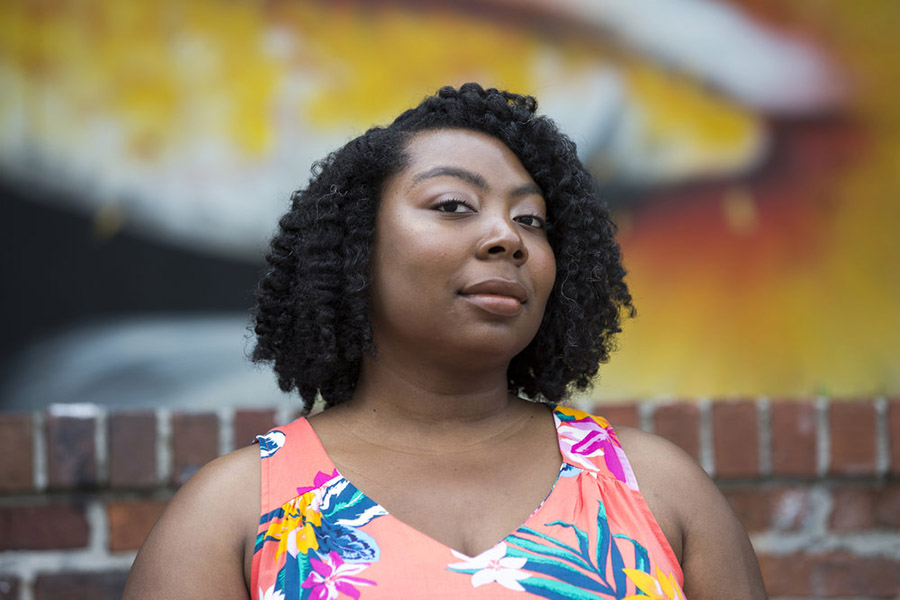
“The permanent underclass that we create with capitalism in this country is what’s problematic,” says Carmen Mays, one of the Zoom panelists who is the Founder & CEO of Elevators, a U.S.-based organisation that fosters equitable entrepreneurial ecosystems for BIPOC creatives and institutions. “We pretend that we’re in a meritorious situation, but that’s not true.”
Even when government programs are intended to benefit disadvantaged communities and level the playing field, few benefit. Consider Opportunity Zones, a Trump-administration created a program that gives tax incentives to those who invest in low-income neighbourhoods, with the promise of jobs and affordable housing. To qualify for the program, an investor must have existing capital gains, which will allow them to defer taxes on those gains depending on the length of the investment. The longer the investment in the low-income neighbourhood, the longer the tax deferment. If the investment is for ten years, they do not have to pay taxes on any of the accrued value. There are over 8,700 Opportunity Zones in the U.S., but though most of them are in impoverished areas, most of the investment has gone to areas that do not need it. In reality, the program is subsidizing luxury developments that happen to be adjacent to impoverished areas.
Mays, who lives in Birmingham, Alabama, a city that has at least 24 Opportunity Zones within a state that has 158, is quite critical of the scheme.
“It’s important for people to realise exactly what Opportunity Zones are. They are the depressed areas that were created by White people who were racist and wanted to leave cities. So as a prize for their racism, they get to come back and invest in those same places,” explains Mays. “So they’re the cause and the cure.” Mays says that people are often surprised by her description of a program that on the surface looks well-intended, but the more is learned about how Opportunity Zones work, and who is taking advantage of the opportunity, the more her description rings true. She believes the investment should go directly to the communities in need. She says that people should be concerned that the same investor class who took their money out of neighbourhoods decades ago causing the economic downturn, now get to benefit by parking their money in a tax shelter in the same places that they caused the problem.
“Just give us the money that you made from fleecing our communities, and creating tax codes that further fleece our communities, so that we can rebuild the things that we want and need. That’s really it,” explains Mays. “The people closest to the pain have the solution. People know how to fix their own problems, they’re just under-resourced.” Investors might try to include a few BIPOC-owned businesses in their plans, but most of the beneficiaries end up being people who do not live close to the area in need. There was even an instance of investors not living in the U.S.
“I don’t want to share ownership with somebody who is invested in two sites within an Opportunity Zone and is also getting their EB-5 visa so they can get special access to the United States, like they did Hudson Yards in New York,” says Mays, who sees non-locals benefitting from Opportunity Zones in Birmingham.
“We have non-Black business owners in Innovation Depot, who don’t live in the Black community, but they benefit from proximity to the Black community because now their business is in an Opportunity Zone so they can get investment,” she says. “It’s a tax shelter. A place to park money for ten years without commitment to do anything. You could just buy some property, mean to do something, have plans to do something because you have ten years,” Mays describes in a mocking way. “You don’t have to move a brick.”
Mays has been a vocal critic of Opportunity Zones in Birmingham because she knows the institutions, groups, and entrepreneurs who should be benefitting from any investments in the community. What is her advice to affluent Americans, some of them who value progressive politics, that constantly muse about what they can do to help communities in need? Her response is curt.
“Just stop,” she says. “This is silly.” For her, everyone knows which communities need the investment, yet the Opportunity Zone program is doing everything other than putting the investment where it is needed. “It’s not complicated,” says Mays, “it’s just that people don’t want to do it.”
Since the support for BAME communities seems to only go so far, even for those with good intentions, Mays is attempting to get Birmingham-based companies to commit more than just words. In late May, after the death of George Floyd, Birmingham had many days of peaceful demonstrations, until one night a rally sponsored by the city itself, turned suspiciously disruptive. As troubling as that was, it was what happened the following day that caught Mays’ attention.
“You had all of these local companies and stores saying we support our Black neighbours. I was like what is this? We’ve been Black here the whole time. So why all of a sudden this unsolicited support? We’re not even your customers. That was the part that really stuck out to me,” she says.
She decided to use this sudden support for the city’s Black community as a way to put actions behind words. Anyone can paint a mural, post a black square on social media with #blacklivesmatter, but what are businesses actually doing? What policies, programs, or institutions that truly make a difference are businesses willing to support? Mays felt that in that moment it was important to hold corporations accountable by reaching out to all of them that were showing their support to see if their interest in the Black community was real, or performative. She keeps a record of the progress in a Social Equity Action Plan.
“I just started collecting images from the internet and went around taking pictures with my own phone. I catalogued it and emailed everybody on it with the message of: I heard what you said. Call me sceptic, but I don’t believe you. I need to know what you plan to do to make this a real thing other than a statement,” Mays recalls. “Most of those companies ignored me because Black people are not their customers, so there was no need for them to respond. They just wanted to minimise their business getting destroyed.”
The lack of response was not surprising for Mays, because it is symbolic of corporations only wanting to do the bare minimum. Similar to Opportunity Zones, there is a tendency to support causes or people who do not need support. Mays noticed this among some Birmingham businesses.
“A few companies responded with a list of things that they already do. They told me that they give money to the Equal Justice Initiative, the museum founded by Bryan Stevenson in Montgomery, Alabama. I think it is really weird that they want to be down for this cause (BLM), but they would give money to an institution in Montgomery, which is 90 minutes south of Birmingham, and is supported by Google, but they don’t give money to the struggling institution that is down the street that has more historical significance,” wonders Mays. “Capitalism and racism go hand in hand. The way you do business also needs an anti-racist agenda. Not just the way you conduct yourself as a person.”
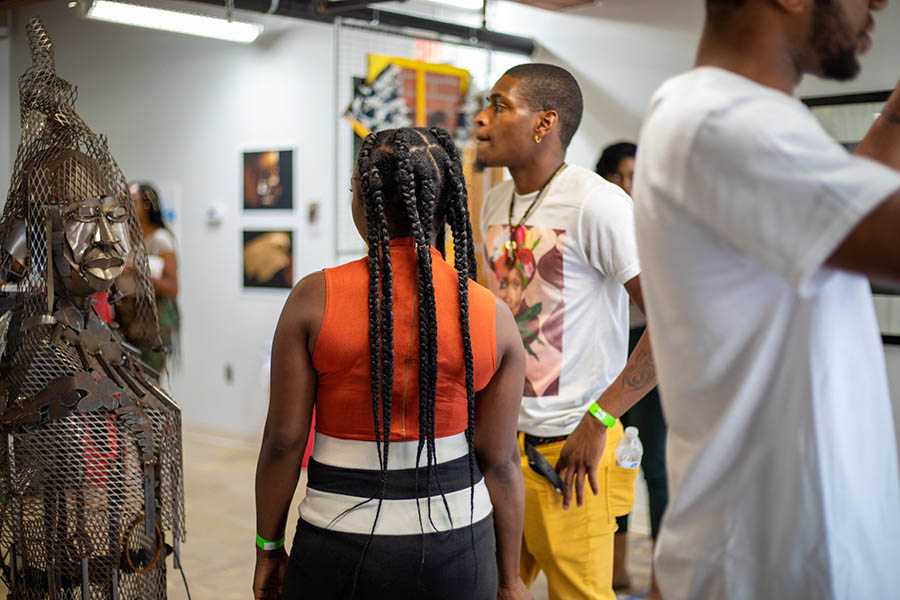

Birmingham’s Black community is a diverse mix of people, which includes people from Mobile and former residents of New Orleans who relocated to the city after Hurricane Katrina in 2005 but never returned. Not only has that enriched the city’s food scene, but it has also energized Birmingham’s creative landscape with photographers, graphic designers, illustrators, artists, jewellery makers, personal care innovators, and others entrepreneurs that Mays helps out with Elevators. It supports creatives with networking opportunities and business workshops. “With Elevators, the first thing that we do is expose people to the idea that the creative arts are a business. That if you are a tattoo artist, you need to copyright your art, and you need to be prepared to enforce that copyright.”
Mays is also on the board of Black Girl Ventures Birmingham, a nonprofit organisation that funds and scales tech-enabled businesses that generate under $1m revenue U.S. a year, and founded by BAME woman-identifying entrepreneurs. Birmingham has always been a creative place, but years of deindustrialisation made it less so. The influx of residents and entrepreneurs now is almost like a return to old glories, but of a different kind.
“Birmingham is a tactile community. We’re less like Atlanta, less like Charlotte, more like Detroit, more like Cleveland,” she describes. “Birmingham is a ‘Rust Belt’ city in the South. We were an iron town, and some of the most beautiful iron gates are produced here. We had multiple steel mills. My dad was in the steel industry when I was younger.”
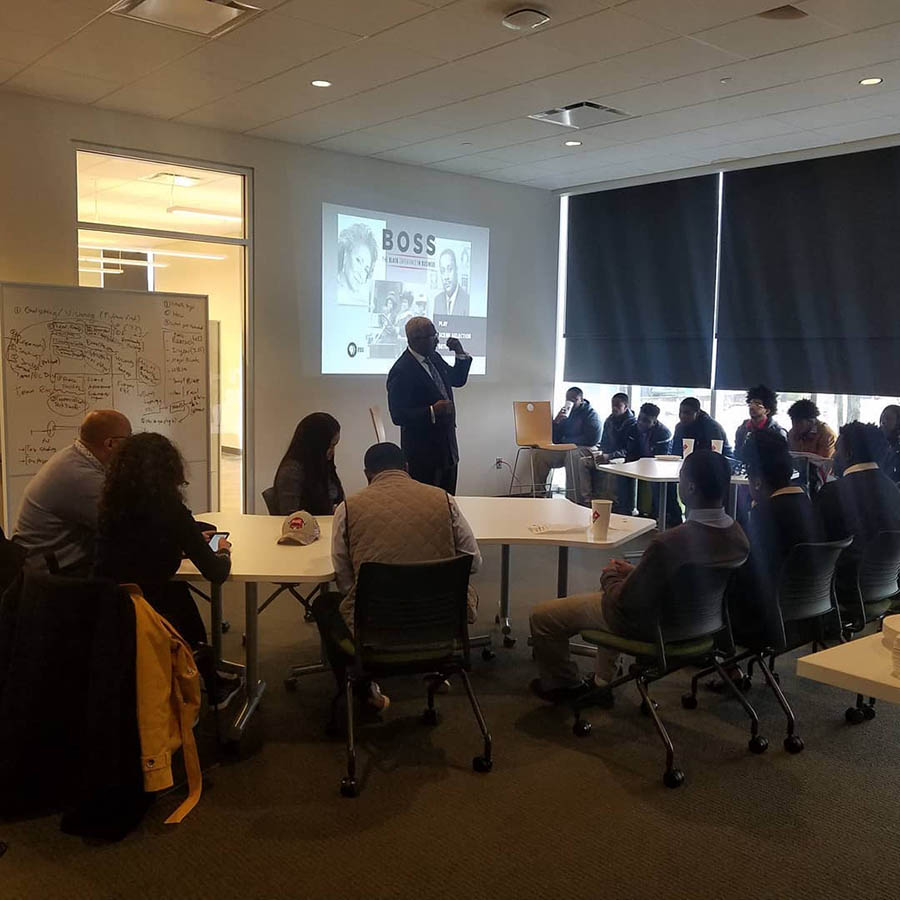
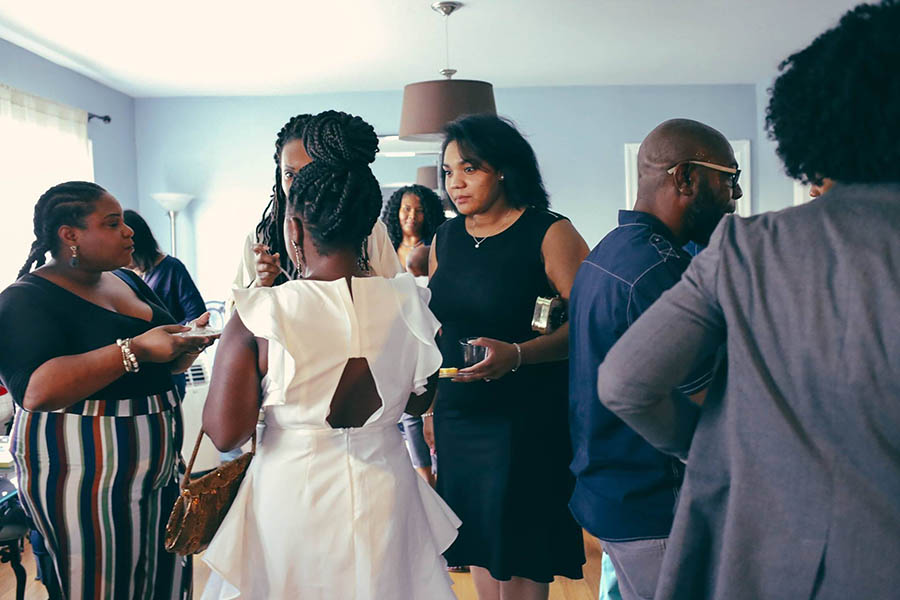
Mays does the hard work that Opportunity Zone investors nor the Birmingham companies she was encouraged to be more equitable in business, do not do. She purposely goes out to see entrepreneurs, observes what they are doing, connects with them, and makes note of what they need. Things that people high up only talk about, especially around election time, but never do.
“To Birmingham’s detriment, the city is not capitalising off of its homegrown talent,” describes Mays. “There’s talented folks out there and they are looking for someone to help them monetise their businesses. These people are figuring things out on their own without the help of the chamber of commerce or any business program. People are doing this by themselves because they don’t have any support.”
In a year that has seen its dark moments, Mays is hopeful that enough people have become aware of the needs of Black communities and are ready to create structural change, particularly after COVID-19. Politically, economically, and culturally, our collective concern for wanting an equitable society must go beyond verbal platitudes, or government programs that pose as the solutions, but are really part of the same old problem. Race.
“I don’t think this time should be wasted. It cost us so much. It has cost us a pandemic. It has cost us hundreds of thousands of people dead in the U.S. and millions more maimed from this disease. It has cost us the murders of Black people in the most grotesque way. To waste this moment, I don’t know what would have to happen again for people to come to a place where they at least want to seem like they want to make a move. I shudder to think, what tragedies would have to accumulate for people to want to talk about race for real. All that happened this year should be enough, but I’m concerned that for some people it’s not enough. How much death and destruction do you need before you consider evaluating some things?”
Words Phil Roberts


