

Chaos theories: Building successful communities by learning from nature
“An environment rigid in form is doomed in time” — from Manchester and Rotterdam’s Mindscapes festival to Pablo Sendra, Richard Sennett and Charles Darwin, can disorder teach us better place-making?
Last month, Earth Day once again made headlines telling us what we already knew. The climate crisis grows more urgent each day, and there’s increasing evidence our current focus on neutral impact, rather than zero emissions, is doing us few favours.
In their article for The Conversation, four climate experts lay the foundations for a very convincing case. Namely Senior Lecturer in Global Systems at the University of Exeter, James Dyke; Emeritus Professor in Environmental Sciences at the University of East Anglia, Robert Watson; and Wolfgang Knorr, Senior Research Scientist specialising in Physical Geography and Ecosystem Science at Lund University. At the risk of being reductive, they explain we need to accept major emission reductions are the only real way to save the planet, focus less on high-tech unicorns, and remember natural rules apply to low-tech carbon capture.

It comes down to two truths. Firstly, climate simulations often include the effects of technology that either didn’t exist at the time, or couldn’t be and subsequently hasn’t been implemented at scale. So many calculations are removed from the reality of what is feasible, and each time a tech is abandoned, new hope materialises, and another decade passes without adequate action and with increased emissions, the numbers become more misleading. Pumping out far, far less immediately is the only course that definitely averts catastrophe, and time is almost up.
Second, nature’s rules stand in opposition to human-made and designed plans when it comes to control and order. For example, industrial-scale green carbon sinks —vast plantations with crops chosen for their carbon capture properties — cause harm in themselves. For nature to be healthy it must be balanced, and there’s no balance in homogeneity. Without diversity, the existing ecosystem collapses. So the fight to save our home world must combine a drastic reining-in with true re-wilding. We need to re-establish ecosystems comprising varied elements because different species not only co-exist in the natural world, they are co-dependent. That co-dependence teaches adaptability, which is an essential survival skill for any environment in constant flux.
In 2020’s Designing Disorder: Experiments and Disruptions in the City, architect and campaigner Pablo Sendra and sociologist Richard Sennett give city planners, urban theorists and social scientists plenty to consider on these terms. Presenting differences between an increasingly ordered, planned and designated built environment with a natural world that has chaos and change at its core, they cite Charles Darwin’s understanding of evolution. Specifically his view that ecosystems are a balance between disequilibrium and equilibrium. “An environment rigid in form, static in programme, is doomed in time,” they write. “Biodiversity gives the natural world the resources to provision change.”
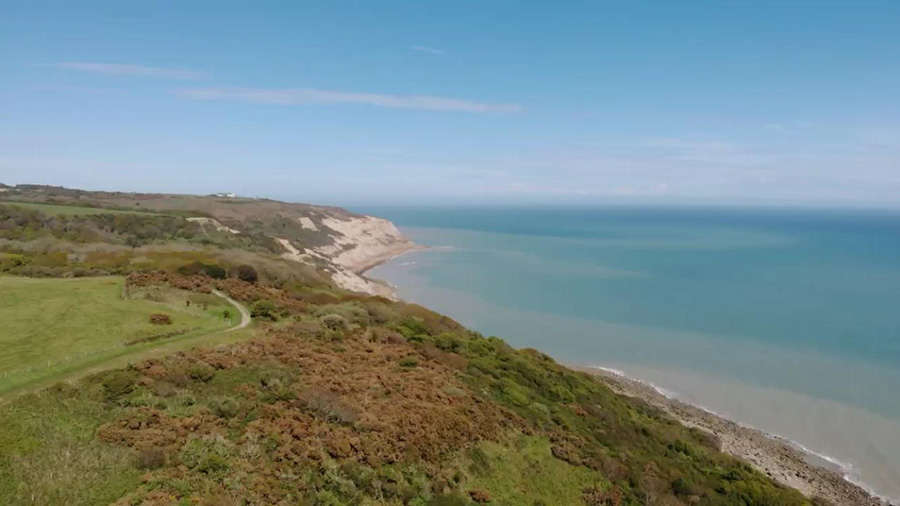
The book goes on to explain how the presence of chaos, and requirement for difference in life, raises questions as to whether we are making places fit not only for basic individual needs and investment, but the needs of a wider, more varied and complex ecosystem — the city. We may have spent a great deal of history trying to deny it, not least the last two centuries, and view ourselves as separate, but we are part of the natural world. We can therefore assume what works for nature works for us. For Sendra and Sennett, this translates as a need to reintroduce disorder and unpredictability to urban areas through the use of planning that allows for change and can respond to different needs, rather places fixed to pre-determined masterplans “doomed in time”. Largely, but not exclusively, talking about public realms and spaces, the idea mirrors nature’s design.
Of course there’s an argument that while Earth dies many cities boom. But scale, population, tallest towers and even access to green space aren’t complete indicators of success. The pandemic has taught us hard lessons about the impact on mental health and wellbeing when spontaneity vanishes. As such it’s no stretch to suggest a truly liveable city is a melting pot of stimuli, things and people, where static and defined meet liminal. When a place is only “rigid in form” it does not seem to fit with how we are hard-wired by nature as an adaptable species, and that can’t be good for us.
Manchester, UK, is a familiar focal point for conversations on rapid (re)development and expansion of cities in Europe. An investment miracle has transformed central districts over the last 20 years, and as the rate of change accelerates so does the scope of proposals. Areas spanning several blocks are frequently earmarked for mixed use developments masked as neighbourhoods. But genuine neighbourhoods are not born fully formed with pre-determined futures based on strict architectural lines. They establish roots and life grows from there, against a backdrop of evolutionary change. You can expand this point to cities at large, too, which originally grew for economic and safety reasons — responses to external factors beyond real control of the population.
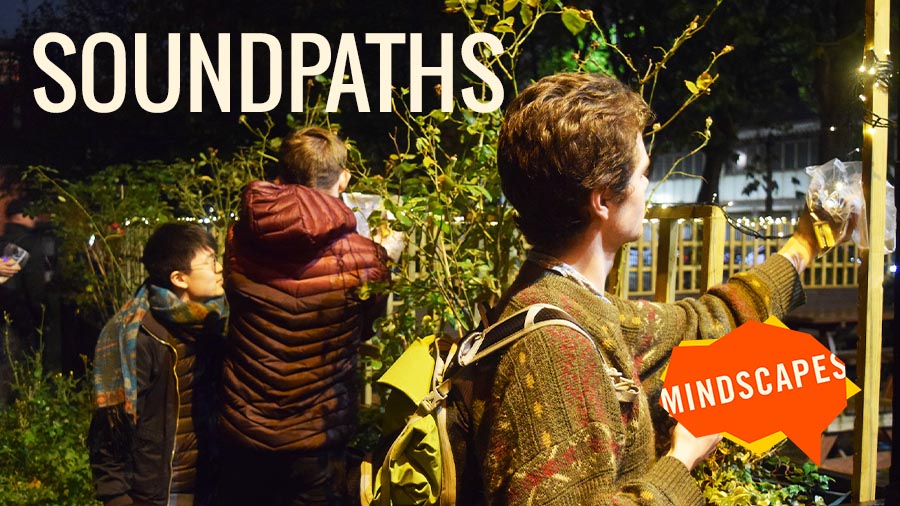
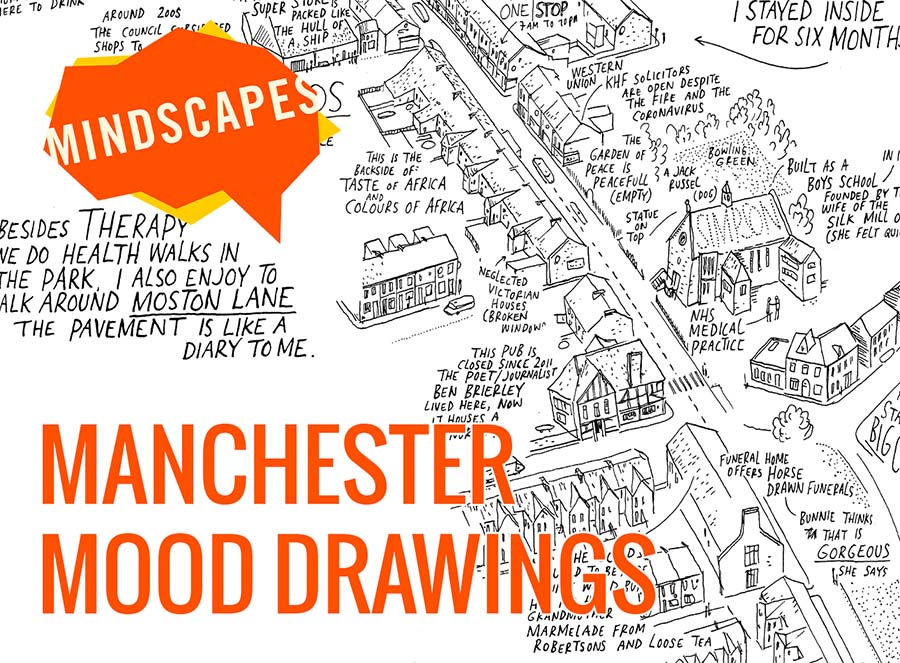

The ongoing Mindscapes programme, presented by SICK! Festival, looks to ask what the modern, and therefore highly ordered, built environment is doing to humans, their communities, perspectives, prospects, and psychologies. A collaborative project between Manchester and Rotterdam, Netherlands — another place where redevelopment is highly pronounced — the online series runs until mid-May, and is focused on one fundamental issue; areas that have the densest populations are often places of extreme loneliness. Just as the natural world is failing worldwide because it lacks balance, might the poor health of our urban ecosystems be connected to the structure and design of cities themselves?
Perhaps, then, if we are figuring out how to legitimately hand land back to nature, and bring nature into urban environments — whether that’s through new parkland or large scale green building projects — we should also consider what else nature’s rules can teach us. By taking influence from that combination of disorder and order, which has helped sustained life on the planet until now, maybe Sendra and Sennett are correct, and communities, another term for urban ecosystems, can flourish for everyone.


