
Low Carbon Chinatown Goes On Tour
Kakilang to tour architectural pop-up structure built from low carbon materials made by designers Usman Haque, Ling Tan and structural engineers Atelier One
Designers Usman Haque and Ling Tan have worked with structural engineers Atelier One to create a pop-up structure built from low carbon materials and processes as part of touring environmental initiative Low Carbon Chinatown to raise awareness about the data science of climate change, Chinese heritage, and food culture.

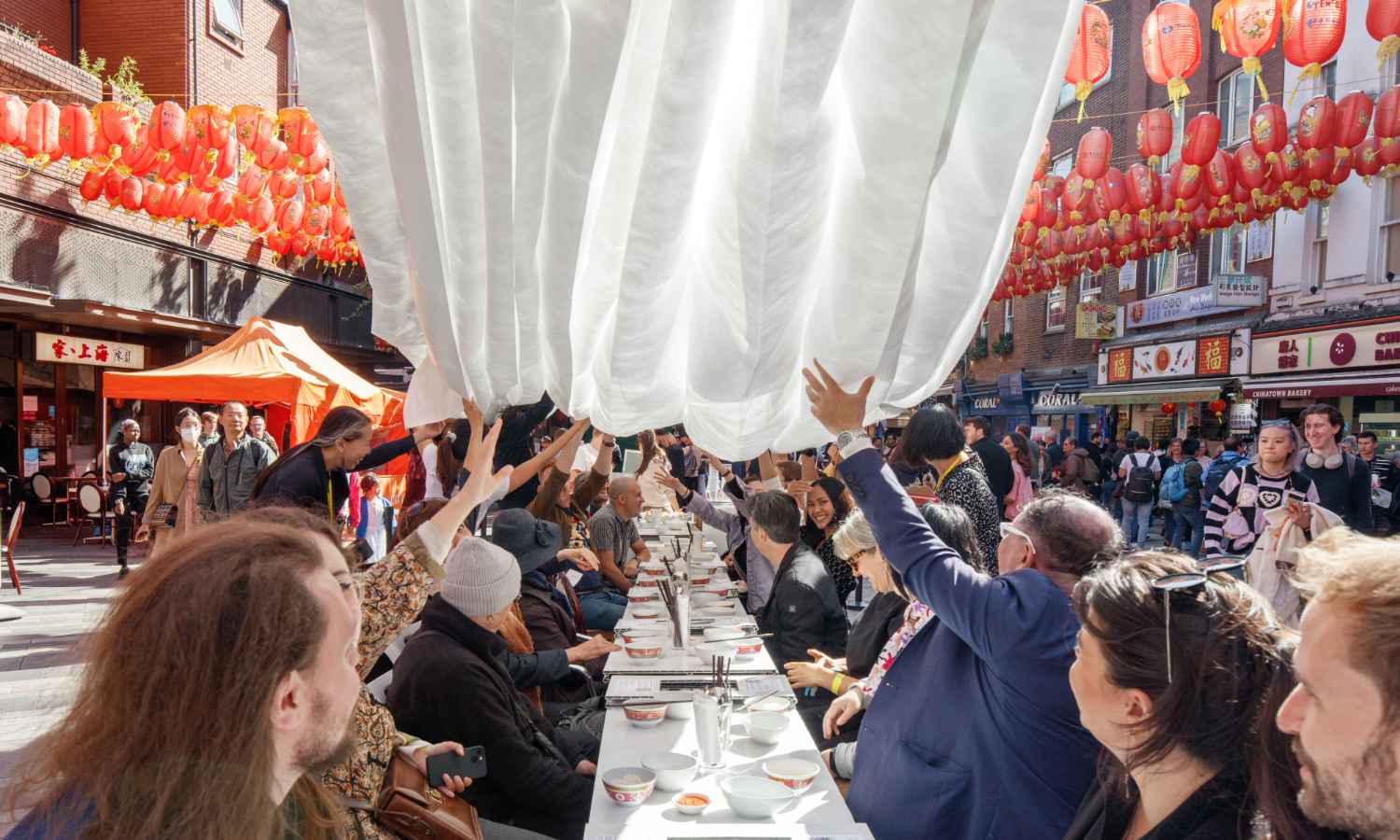
Launched in the heart of London’s Chinatown as part of London Design Festival, the pop-up prototype showcased the designers’ approach to creating and fabricating sustainable touring works and, over three days, hosted a series of sit-down tastings of low carbon Chinese dishes to encourage the public to consider the impact of their own cooking on the climate.
Designed to be easily assembled and disassembled, and transported by a small electric van, the structure comprises three key components: a preparation unit, a long banquet table, and a pleated canopy which have been thoughtfully made from materials that are sustainable, low-carbon and easily recyclable in existing facilities once touring ends.
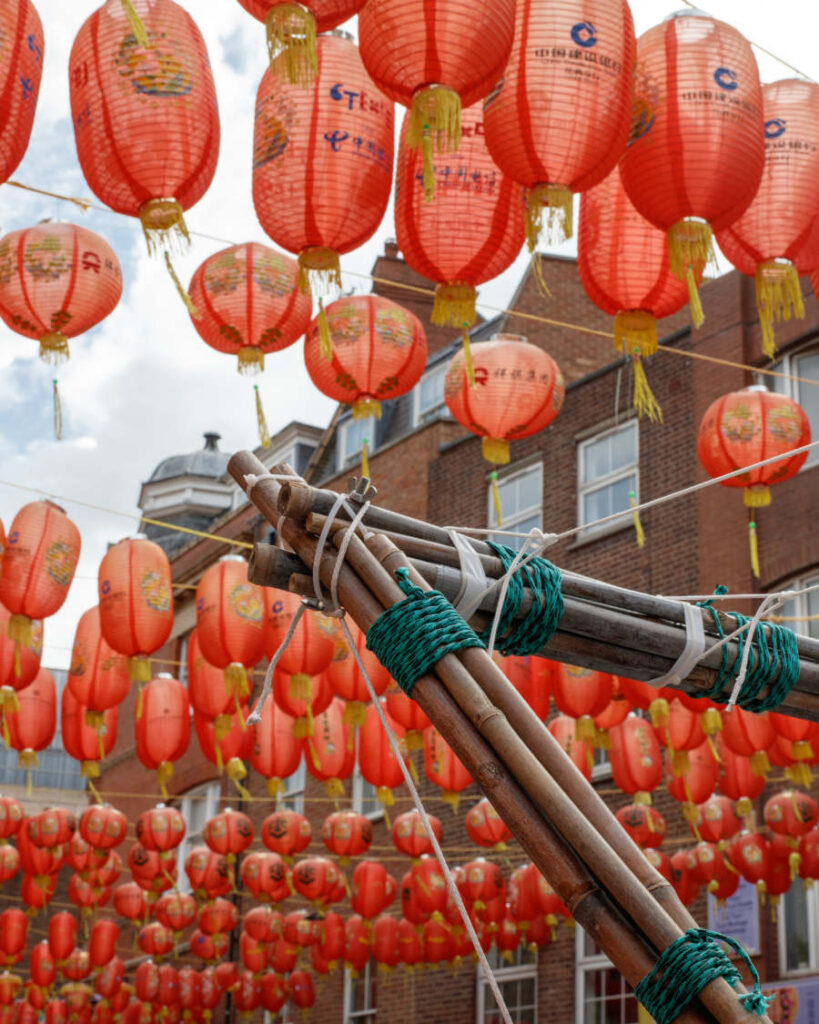
UK grown and harvested Borinda Bamboo from Ness Botanic Gardens in Liverpool was used for the structural members. Borinda bamboo is a hardy plant that thrives in different climates. When harvested, it is a strong, versatile, and sustainable material that also has a powerful capacity for capturing carbon.
The pop-up’s surfaces, counters and cladding were fabricated using EnviroHoard™ a recyclable alternative to typical construction hoarding panels developed by UK-based Panthera Group. In contrast to normal plywood hoarding, the panels are typically reused up to three times on different sites over several years, and then recycled and processed again to be used as new hoarding panels.
The canopy is constructed from pleated Tyvek. While not low-carbon in and of itself, Tyvek is a lightweight, waterproof, and paper-like substance that can be easily repurposed and recycled. Made with 100% HDPE, it is often used in banners and disposable protective wear and can be mechanically recycled into products such as underground cable protection piping, automotive parts, packaging cores and trays.
Low Carbon Chinatown is a touring environmental initiative produced by Kakilang combining community participation, art and design, data science, digital tech and Chinese food culture to help people make sense of issues surrounding climate change through learning and adopting low carbon (footprint) processes in their everyday lifestyle. The meals served at the London pop-up were developed by East & South East Asian communities in London in collaboration with a data scientist and acclaimed Asian chefs and food writers.


